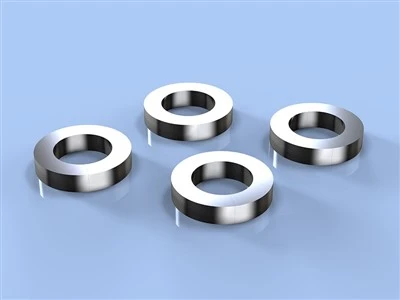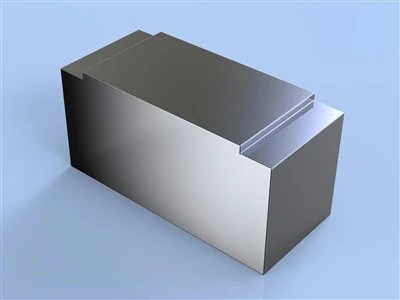

The high performance NdFeB magnet is becoming the core functional material in the modern industry. It is widely used in the new energy car industry, wind power industry and consumer electronics industry. How to produce the NdFeB magnet block ? We will explain the details of the sintered NdFeB magnet manufacturing, analysis the complete process flow from raw materials to finished products, reveals the precise manufacturing technology behind its high performance.

1. Ingredients: Precise control of elemental composition
The first step of manufacturing the sintered NdFeB magnet is the strict compounding. According to the target maget requirement, such as Br, Hcj, (BH)max, we need to accurate culculate the proportions of neodymium (Nd), iron (Fe), boron (B), and a small amount of added elements such as dysprosium (Dy), terbium (Tb), cobalt (Co), aluminum (Al).

The adding components of rare earth element is used to form the Nd2Fe14B. Adding Dy,Tb and other rare earth element is used to enhance the coercivity. Adding Co and Al could improve the material's Curie point and corrosion resistance. The precision of the material determines the production of the Nd2Fe14B and the potential magnetic properties.

2. Melting
The prepared material are subjected to high temperature in vacuum and insert gas furnace. During the melting process, we make sure the elements fully mixed by mixing. They will form the uniform alloy melt. Then the melt is fastly cooled and solidified by slapping process. In this process, the alloy cast sheet will be formed with specified crystal texture.

Rapid solidification helps to form small and uniform grain structures. It could avoid the precipitation of the α-Fe non magnetic elements. It give the a good microstructure foundation for the coming manufacturing process.
3. HD:Pre-crush treatment
After the alloy ingot smelted, it will be pre crushed by HD techniques. We put the alloy ingot in the hydrogen environment with specified temperature and pressure. The hydrogen atom permeated and spread with the alloy grain boundary. Hydrogen atoms will penetrate and spread along the alloy grain boundaries. It makes lattice expansion and inner stress. It will make the alloy block break into smaller pellets.

HD not only achieve the alloy pre-crushe to enhance the crushing effieciency of the jet mill, but also make the hydrogen atom attached in the surface of the pellets, which could help the non oxidation of the powder in the grinding process.
4. Powder Manufacturing: Prepare the powder at the micron level
The alloy pellet after HD procedure is precisely grinded through airflow mill. The airflow mill use pellet powder in high speed air collision and friction. It could make the alloy pellet into smaller uniformed powder in 3-5 micron level.

The pellet distriobution of the powder have the obvious influence to the magnet's density and magnetic performance. Small uniformed distributed powder help the magnet in better density and better magnetocrystalline anisotropy.
5.Pressing and forming (orientation) : Magnetic field orientation and green body formation
We deliever the micron level powder into the forming mould in the outer magnetic field. Under the magnetic field, the magnetic powder pellet in different orientated will arranged along with the magnetic field direction. We press the powder into green body in the required shape and density through the hydraulic machine's single and two way pressure in the magnetic field.

Magnetic field orientation is a key step in endowing sintered neodymium iron boron with high residual magnetism and high anisotropy. The higher of orientation degree, the better of residual magnetism performance of the final magnet.The pressing density directly influences the sintering density.
6. Vacuum sintering: Densification and microstructure formation
The green body is sintered at high temperature (1000-1100°C) in a vacuum or inert atmosphere. The powder pellet makes the solid phase difussion and liquid phase sintering under high temperature if liquid-phase is present. The gap is becoming disappear. The density of material is largely increased. The dense sintering body is produced.

Sintering process is the one of the core part of the sintering neodymiun iron boron magnet production. It decides the magnet's density, grain size and phase composition.
7. The green body performance testing: Preliminary assessment of magnetic properties
The green body after sintering has a preliminary magnetic properties testing. We will test the data like Br, Hcj, (BH)max and so on. It could preliminary verify the sintering manufacturing process. It could help to find remove the sub-quality products. It could insure the effectiveness of the following manufacturing process. Normally we use the hysteresis curve tester to test the magnet's magnetic properties.

8. Mechanical post-processing: Precision forming and dimensional control
The size of the magnet after sintering is large. The surface is rough. Normally we could not dirrectly use it in the application. We need to precisely machanical producing the magnet according to the customer's final requirement, including slicing, grinding and drilling hole and so on. Because of the high hardness and high brittleness of the neodymium iron boron material, we normally use the cutting machine, slicer, and grinder and so on to manufacturing the green body. The machining accuracy will dirrectly influence the magnet's installation and application.

9. Surface treatment:Anti corrosion and functional coating
The sintered neodymium iron boron magnet is easy to oxidate and corrosion. We need to use the surface coating to protect the magnet. Normally the surface coating we use is standard nickel, black nickel, chemical nickel, Zn , epoxy and gold coating. The surface coating could isolate the magnet and the humid air to extend the life time. It could also meet the functional requirement in the specified application scenario. The selection of the proper surface coating depends on the magnet's application scenario and customer's requirement.

| Coating Type | Color | Key Features | Functional Differences | Salt Spray Test Duration (Hours) |
| Standard Nickel Magnet | Bright silver | Balanced corrosion protection and wear resistance | The most widely used general-purpose coating | 120 - 200 |
| Black Nickel Magnet | Matte black | Non‑reflective black appearance, anti‑glare, good corrosion resistance | Used in optical and specific industrial applications | 48 - 96 |
| Gold Plating Magnet | Golden | Excellent conductivity, biocompatibility, and luxurious appearance | Good interlayer adhesion | 12 - 72 |
| Zinc Plating Magnet | Silver-white / Blue-white | Cost‑effective, compatible with adhesives | Protects magnet via sacrificial anode principle | 12 - 48 |
| Epoxy Coating Magnet | Customized | Superior as a barrier coating; electrically insulating; color customizable | Some grades tolerate up to 380°C | 72 - 108 |
| Tin Coating Magnet | Silver | Usually applied in a standard Ni-Cu-Ni base, Tin top | Excellent solderability; soft surface that buffers impact; Suitable for electronic packaging | 36 - 72 |
| Electroless Nickel Magnet | Silver-white | Very high corrosion resistance; Ideal for complex‑shaped magnets with demanding requirements | High‑phosphorus version is non‑magnetic; Extremely uniform coverage | 96 - 1000 |
10. Product inspection: Strict quality control
The magnet product will be strictly appearance tested after the machanical process and surface treatment. The inspection item including magnetic properties, size accuracy, appearance, surface coating, corrosion resistance and so on. It ensure that the data all meet the demand of the design's requirement. The product accessment is the important part to make sure the product meets the customer's standard and codes of practise. Normally we use the visual check, optical inspection equipment and precision measuring instrument.

11. Magnetization: To endow a magnet with magnetic properties
Before shipping the magnet, the neodymium iron boron magnet need to magnetized in the strong magnetic field. It could make the magnet achieve the saturated magnetization state. The magnet will have the magnetic performance. We could magnetized the magnet in different ways according to the customer's requirement.

12. Packaging and shipment: Safe transportation and storage
The proper neodymium iron boron magnet use many kinds of paper box, foam plastic, plastic and carton to pack the magnet. In order to avoid the interruption or the attraction between the magnets, we also use the steel plate to magnetic shielding. Complete packaging helps protect magnets from damage. It ensure the products could saftely delivered into the customer's warehouse.

High performance neodymium iron boron magnet production is the outcome of interdisciplinary integration in materials science, metallurgical engineering, mechanical processing and so on. Every step contains the rigorous scientific principle ans exquisite engineering technology. The precise production process makes the neodymium iron boron magnet in the excellent magnetic properties. The neodymium iron boron magnet is playing a important role in the modern high technology area.