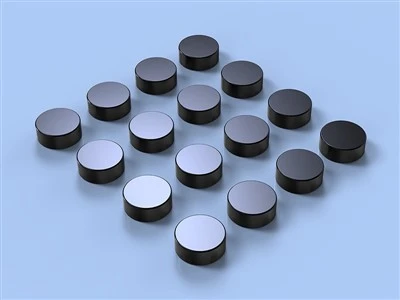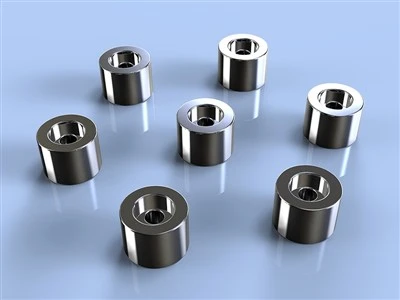
Neodymium iron boron (NdFeB) magnets are metallic alloys that possess some electrical conductivity due to the inherent properties of metals. However, compared to common conductors like copper and aluminum, the conductivity of NdFeB magnets is not particularly outstanding. This is because although neodymium, iron, and boron are all metallic elements, they have relatively few free electrons, resulting in weak conductivity.
It's worth noting that while NdFeB magnets do possess some conductivity, this property is not typically utilized in practical applications. Instead, their magnetic properties are more important. This strong magnetic material is primarily used in the manufacture of motors, generators, hard disk drives, MRI scanning equipment, etc., which operate primarily by using electric current to generate a magnetic field, rather than relying on the magnet's inherent conductivity.
When designing and manufacturing these devices, specialized conductors (such as copper and aluminum) are used to conduct the current, and the strong magnetic field generated by the NdFeB magnets is used to convert or control the electrical power. Therefore, although NdFeB magnets do possess some conductivity, this is not the primary reason for their use.
Furthermore, while the conductivity of NdFeB magnets is not strong, this characteristic can become problematic in certain situations. For example, if a magnet comes into direct contact with a conductive material, it may cause a short circuit or current leakage. Therefore, when using neodymium iron boron magnets, we need to take measures, such as wrapping them with insulating material, to avoid this situation.