The size of mobile phone charging magnets varies significantly depending on their type and design. Common specifications are as follows:
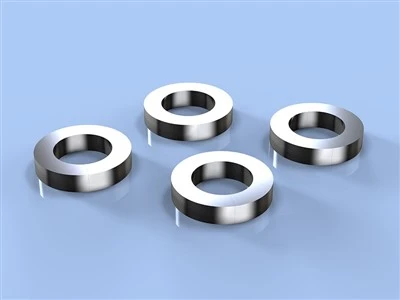
MagSafe Magnetic Coil: MagSafe technology typically uses magnetic coils with an outer diameter ranging from Φ54mm to Φ46mm, with the specific size depending on the product model and design requirements. The number of magnets can be adjusted according to the required attraction force. For example, Apple's original MagSafe accessories achieve precise alignment through optimized magnet arrangement. Furthermore, this type of magnet is customizable, allowing for production of larger (e.g., Φ60mm and above) or smaller (e.g., Φ40mm and below) sizes to suit different devices or charging scenarios.
MagSafe Ring Magnet Array: According to the iFixit teardown report, MagSafe uses a ring magnet array with a diameter of approximately 15mm, composed of multiple small magnets. Each magnet has a diameter of 1.5mm and a thickness of 1mm, achieving strong attraction through high-density arrangement. This design ensures both compact structure and stable and durable magnetic attraction, and is commonly found in mobile phone wireless charging modules.
MagSafe Ring Magnet Array: Universal Wireless Charging Magnets
Magnets used in universal wireless charging devices come in various sizes, with common specifications including:
Model A01: A 90mm long, 10mm wide bar magnet, suitable for long, narrow charging docks;
Model B02: A thickened magnet, 100mm long, 15mm wide, providing stronger attraction;
Model C03: An ultra-thin magnet, 80mm long, 8mm wide, balancing portability and functionality. These specifications are usually listed in the wireless charging magnet's specification sheet, allowing users to choose according to their device needs.
Experimental Reference Data
Experiments show that a 6mm diameter, 2mm thick neodymium iron boron magnet can provide approximately 0.5N of attraction force, sufficient for securing a mobile phone. Neodymium iron boron material is the preferred choice for small magnets due to its high remanence and coercivity. These magnets are commonly used in third-party wireless charging accessories, balancing cost and performance by adjusting size and quantity.