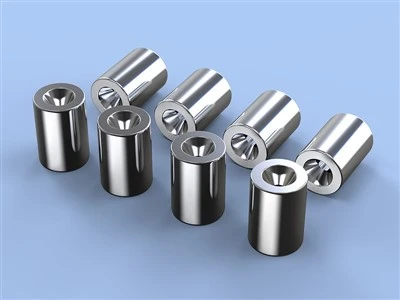

What is the Curie temperature of NdFeB Ring Magnet?
As a supplier of NdFeB ring magnets, I often receive inquiries about various technical aspects of these powerful magnets, and one question that comes up frequently is about the Curie temperature. In this blog, we'll delve into the concept of Curie temperature in the context of NdFeB ring magnets, its significance, and how it impacts the performance and application of these magnets.
Understanding the Curie Temperature
The Curie temperature, named after the French physicist Pierre Curie, is a critical physical property of magnetic materials. It represents the temperature at which a ferromagnetic material loses its permanent magnetic properties and becomes paramagnetic. In simpler terms, when a magnet is heated to its Curie temperature, it essentially "forgets" its magnetic orientation and can no longer hold a stable magnetic field.
For NdFeB magnets, which are known for their incredibly strong magnetic properties, the Curie temperature is typically around 310 - 400 degrees Celsius (590 - 752 degrees Fahrenheit), depending on the specific composition and manufacturing process. The basic formula of NdFeB magnets is Nd₂Fe₁₄B, but manufacturers often add other elements such as dysprosium (Dy) or terbium (Tb) to enhance the magnet's coercivity and temperature stability, which can also affect the Curie temperature.
Why is the Curie Temperature Important?
The Curie temperature is a crucial factor in determining the suitability of NdFeB ring magnets for different applications. Many industrial and technological applications require magnets to operate under a wide range of temperatures. For example, in electric motors, generators, and voice coil motors, magnets are exposed to heat generated by electrical currents and mechanical friction. If the operating temperature approaches or exceeds the Curie temperature of the NdFeB magnet, the magnetic strength will decrease significantly, leading to a loss of performance in the device.
In high - temperature environments, such as those found in some industrial manufacturing processes or aerospace applications, it's essential to choose NdFeB magnets with a higher Curie temperature. Magnets with a higher Curie temperature can maintain their magnetic properties better under elevated temperatures, ensuring the reliability and efficiency of the equipment.
Factors Affecting the Curie Temperature of NdFeB Ring Magnets
As mentioned earlier, the composition of NdFeB magnets plays a significant role in determining their Curie temperature. The addition of rare - earth elements like dysprosium and terbium can increase the coercivity of the magnet, which is the ability of the magnet to resist demagnetization. These elements also have a positive effect on raising the Curie temperature. However, the use of dysprosium and terbium is limited by their high cost and limited supply.
The manufacturing process also affects the Curie temperature. Advanced manufacturing techniques, such as powder metallurgy, can produce NdFeB magnets with a more uniform microstructure, which can enhance the overall magnetic properties and the stability of the Curie temperature. Additionally, proper heat treatment during the manufacturing process can optimize the magnetic performance of the magnets.
Measuring the Curie Temperature
There are several methods available for measuring the Curie temperature of NdFeB ring magnets. One common method is the use of a vibrating sample magnetometer (VSM). In this method, the magnet is placed in a magnetic field, and the magnetization of the sample is measured as the temperature is increased. The point at which the magnetization drops to zero is considered the Curie temperature.


Another method is differential scanning calorimetry (DSC). This technique measures the heat flow associated with the magnetic transition of the material. As the magnet approaches its Curie temperature, there is a characteristic change in the heat flow, which can be used to determine the Curie temperature accurately.
Applications of NdFeB Ring Magnets and Curie Temperature Considerations
NdFeB ring magnets are widely used in various industries due to their high magnetic strength and compact size. Some common applications include:
- Electric Motors: In electric motors, the performance of the motor is directly related to the magnetic strength of the magnets. Motors operating in high - temperature environments, such as in electric vehicles or industrial machinery, require NdFeB ring magnets with a high Curie temperature to ensure stable performance.
- Magnetic Resonance Imaging (MRI): MRI machines rely on strong and stable magnetic fields. NdFeB ring magnets can be used in some types of MRI systems. However, the strict temperature requirements of MRI equipment mean that magnets with a well - defined and high Curie temperature are necessary.
- Audio Equipment: In speakers and headphones, NdFeB ring magnets are used to convert electrical signals into sound waves. Although the temperature in audio equipment is generally not as high as in some industrial applications, understanding the Curie temperature is still important to ensure long - term performance and reliability.
Other Shapes of NdFeB Magnets and Their Applications
In addition to NdFeB ring magnets, we also supply a variety of other shapes of NdFeB magnets, each with its unique applications. For example, Countersunk Hole Magnet is often used in applications where the magnet needs to be flush - mounted, such as in signage and display systems. NdFeB Tile Magnet is suitable for creating large magnetic arrays, which can be used in magnetic separators and magnetic couplings. NdFeB Disc Magnet is popular in hobby and educational applications due to its simple and versatile shape. NdFeB Block Magnet is commonly used in magnetic assemblies and automation equipment. And NdFeB Sector Magnet is often used in precision motors and sensors.
Conclusion and Call to Action
Understanding the Curie temperature of NdFeB ring magnets is essential for ensuring the optimal performance of these magnets in various applications. Whether you are in the automotive, aerospace, medical, or consumer electronics industry, choosing the right NdFeB ring magnets with the appropriate Curie temperature can make a significant difference in the efficiency and reliability of your products.
As a supplier, we are committed to providing high - quality NdFeB ring magnets and other shaped magnets with precise control over the magnetic properties, including the Curie temperature. If you have any questions about our products or need help in selecting the right magnet for your application, please don't hesitate to contact us for further discussion and procurement negotiations. We look forward to working with you to meet your specific magnetic needs.
References
- Skomski, R., & Coey, J. M. D. (1999). Permanent magnets and magnetization processes. Physics Reports, 315(1 - 2), 151 - 198.
- Buschow, K. H. J. (2001). Magnetism and metallurgy of Nd - Fe - B type permanent magnet materials. Journal of Magnetism and Magnetic Materials, 226 - 230, 1347 - 1356.
- Hadjipanayis, G. C., & Givord, D. (Eds.). (1991). Rare - Earth Iron Permanent Magnets. Springer Science & Business Media.