
Eddy current losses are a significant concern when working with NdFeB cylinder magnets. As a supplier of these high - performance magnets, I've seen firsthand how these losses can impact the efficiency and performance of various applications. In this blog, I'll share some practical ways to minimize eddy current losses in NdFeB cylinder magnets.
Understanding Eddy Current Losses
Before we dive into the solutions, let's quickly understand what eddy current losses are. When a magnetic field changes around a conductor, like an NdFeB cylinder magnet, it induces circulating currents within the conductor. These are called eddy currents. According to Lenz's law, these eddy currents create their own magnetic fields that oppose the change in the original magnetic field. The energy dissipated as heat due to the resistance of the material to these eddy currents is what we call eddy current losses.
Increase the Electrical Resistance of the Magnet Material
One of the most straightforward ways to minimize eddy current losses is to increase the electrical resistance of the NdFeB cylinder magnet. Higher resistance means that for a given induced voltage, the eddy current will be lower. We can achieve this by modifying the material composition of the magnet.
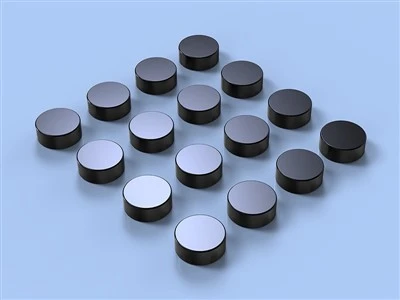
For instance, adding certain alloying elements can increase the resistivity of the NdFeB material. However, it's a delicate balance because we don't want to compromise the magnetic properties of the magnet. Through research and development, we've found that small amounts of specific elements can effectively increase resistance without sacrificing too much magnetic strength. Check out our NdFeB Disc Magnet - similar principles apply when it comes to managing eddy current losses, and we've optimized its material composition for better performance.
Lamination of the Magnet
Lamination is a well - known technique in electrical engineering to reduce eddy current losses. Instead of having a solid NdFeB cylinder magnet, we can divide it into thin laminations separated by an insulating material. These laminations are arranged in such a way that the eddy currents are restricted to each individual layer.
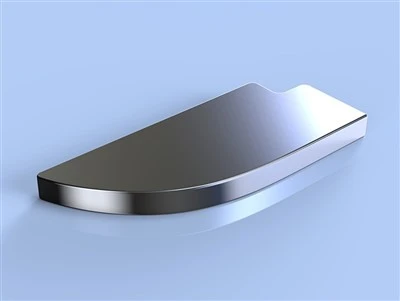
Since the cross - sectional area available for the eddy currents to flow is reduced, the magnitude of the eddy currents decreases, leading to lower losses. For example, in transformers, laminated cores are used to minimize eddy current losses. We can apply the same concept to our NdFeB cylinder magnets. You can also think about how this technique can be useful for other shapes like NdFeB Arc Magnet, where eddy current management is equally important.
Reduce the Frequency of the Changing Magnetic Field
Eddy current losses are directly proportional to the square of the frequency of the changing magnetic field. So, if possible, reducing the frequency of the magnetic field variation around the NdFeB cylinder magnet can significantly cut down the losses.


In some applications, like electric motors, the frequency of the magnetic field is determined by the operating speed of the motor. By adjusting the motor design or control strategy to operate at a lower frequency, we can reduce the eddy current losses. Of course, we need to ensure that the performance of the overall system isn't compromised too much. If you're looking for other shapes that can work in low - frequency applications, our Countersunk Hole Magnet might be a good option.
Shielding the Magnet
Another approach is to use magnetic shielding materials around the NdFeB cylinder magnet. These materials can redirect the magnetic field lines and reduce the rate of change of the magnetic field within the magnet itself.
For example, mu - metal is a popular magnetic shielding material. By placing a layer of mu - metal around the magnet, we can create a shield that absorbs and redirects the magnetic field, thus reducing the induced eddy currents. This technique can also be applied to other magnet shapes, such as NdFeB Block Magnet, to improve their efficiency.
Optimize the Magnet Shape and Size
The shape and size of the NdFeB cylinder magnet can also have an impact on eddy current losses. A larger cross - sectional area perpendicular to the direction of the changing magnetic field will result in higher eddy current losses.
We can optimize the shape of the magnet to reduce the cross - sectional area exposed to the changing magnetic field. For example, a thinner cylinder might have lower eddy current losses compared to a thicker one. Additionally, we can consider the aspect ratio of the cylinder. A more elongated cylinder may experience different eddy current patterns compared to a shorter, fatter one. Similar shape optimization considerations can be made for Throug Hole Magnet to manage eddy current losses.
Conclusion
Minimizing eddy current losses in NdFeB cylinder magnets is crucial for improving the efficiency and performance of various applications. By increasing the electrical resistance of the magnet material, using lamination, reducing the frequency of the changing magnetic field, applying shielding, and optimizing the shape and size, we can effectively cut down these losses.
As a supplier of NdFeB cylinder magnets, we're committed to helping our customers get the most out of their magnets. We have the expertise and resources to provide customized solutions based on your specific requirements. Whether you need a magnet with low eddy current losses for a high - performance motor or a precision device, we can work with you to find the best solution.
If you're interested in learning more about our NdFeB cylinder magnets or have any questions about minimizing eddy current losses, don't hesitate to reach out. We're here to assist you with your procurement needs and discuss how our products can fit into your application.
References
- "Magnetic Materials: Fundamentals and Applications" by E. C. Kennedy
- "Electric Machinery Fundamentals" by S. J. Chapman
- Various research papers on eddy current losses in magnetic materials from IEEE Xplore