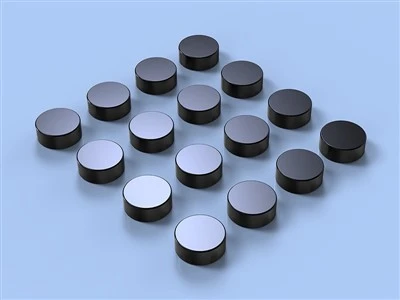

Can NdFeB cube magnets be used in thermal sensors? That's a question I've been getting a lot lately, and as a supplier of NdFeB Cube Magnets, I'm more than happy to dig into it.
First off, let's talk a bit about what NdFeB cube magnets are. NdFeB stands for Neodymium Iron Boron, and these magnets are the real deal when it comes to strength. They're the strongest type of permanent magnets out there, and they come in all sorts of shapes, including cubes. If you're interested in checking out our range of NdFeB Cube Magnets, you can click NdFeB Cube Magnet.
Now, onto thermal sensors. Thermal sensors are like little detectives that can tell you how hot or cold something is. They're used in a ton of different applications, from your home thermostat to high - tech industrial equipment.
So, can our mighty NdFeB cube magnets find a place in thermal sensors? Well, it all boils down to a few key factors.
Magnetic Properties and Temperature
One of the main things to understand is how the magnetic properties of NdFeB cube magnets change with temperature. NdFeB magnets have what's called a Curie temperature. The Curie temperature is the point at which a magnet loses its permanent magnetic properties and becomes paramagnetic. For NdFeB magnets, this temperature typically ranges from around 310°C to 400°C, depending on the specific grade.
This is an important consideration for thermal sensors. If you're designing a thermal sensor that needs to work in high - temperature environments, the Curie temperature can limit the use of NdFeB cube magnets. Once the temperature gets too close to that Curie point, the magnet's strength decreases significantly, which can throw off the readings of the sensor.
On the flip side, at lower temperatures, NdFeB cube magnets maintain their strong magnetic fields. This stability can be an advantage in thermal sensors that operate in cooler settings. For example, in some refrigeration systems or cold storage applications, the consistent magnetic properties of NdFeB cube magnets can be useful.
Thermal Expansion
Another factor is thermal expansion. All materials expand when they get hot and contract when they cool down. NdFeB cube magnets are no exception. When they expand or contract due to temperature changes, it can affect their magnetic field and the position within the sensor.


In a thermal sensor, accuracy is key. If the magnet is moving around or its magnetic field is changing due to thermal expansion, it can lead to inaccurate temperature readings. However, if proper engineering and design are implemented, this issue can be mitigated. For instance, mounting the magnet in a way that allows for some movement or using compensating materials can help keep the sensor accurate.
Eddy Currents and Heat Generation
When a magnetic field changes, it can induce eddy currents in nearby conductive materials. In a thermal sensor, if the NdFeB cube magnet's magnetic field is varying (for example, during temperature - related changes), these eddy currents can be generated. Eddy currents can cause heat, which can then affect the temperature measurement being made by the sensor.
This is something that needs to be carefully considered when using NdFeB cube magnets in thermal sensors. Designers need to figure out ways to minimize eddy currents, such as using non - conductive materials or proper shielding.
Potential Applications of NdFeB Cube Magnets in Thermal Sensors
Despite the challenges, there are definitely some potential applications where NdFeB cube magnets could shine in thermal sensors.
In some biomedical devices, where small size and high magnetic strength are crucial, NdFeB cube magnets could be integrated into thermal sensors. For example, in a wearable health monitor that tracks body temperature, the small and powerful NdFeB cube magnet could be part of a sensor design that's both accurate and compact.
In the automotive industry, thermal sensors are used everywhere, from engine management systems to climate control. NdFeB cube magnets could be used in sensors that need to withstand a certain amount of heat while still providing reliable magnetic functionality. For example, in sensors that monitor the temperature of oil or coolant in the engine.
Comparing with Other Magnet Shapes
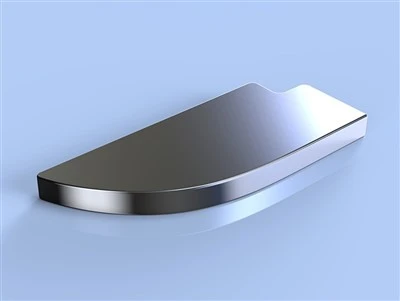
We also offer other shapes of NdFeB magnets, and they might also be considered for thermal sensors. For example, the NdFeB Sector Magnet offers a different magnetic field distribution compared to the cube magnet. This unique distribution could be beneficial in certain sensor designs where a more focused or diffusion - like magnetic field is required.
The NdFeB Arc Magnet can also be an option. Its curved shape might be more suitable for applications where the sensor needs to fit into a circular or curved space.
And then there's the Through Hole Magnet. The hole in the middle can allow for the passage of wires or other components, which could simplify the design of a thermal sensor.
If you're looking for a magnet that can be easily attached to other parts, our Adhesive NdFeB Magnet could be the answer. This type of magnet can be quickly and securely fastened in place within a thermal sensor, reducing the need for complex mounting mechanisms.
Conclusion
So, can NdFeB cube magnets be used in thermal sensors? The answer is yes, but with some caveats. It depends on the specific requirements of the sensor, such as the temperature range it needs to operate in, the level of accuracy required, and the design constraints.
If you're in the process of designing a thermal sensor or any other application that requires high - quality magnets, we're here to help. Our team of experts can work with you to figure out the best magnet type and configuration for your project. Whether it's our NdFeB cube magnets or other shapes like sector, arc, through - hole, or adhesive magnets, we've got a solution for you. Reach out to us to start a discussion about your procurement needs and let's work together to create a successful project.
References
- O'Handley, R. C. (2000). Modern magnetic materials: principles and applications. Wiley.
- Cullity, B. D., & Graham, C. D. (2008). Introduction to magnetic materials. Wiley.
- Handbook of Thermal Sensors and Applications by Colin Hanson.