
What is the Remanence of Black Nickel Magnets?
As a dedicated supplier of Black Nickel Magnets, I've encountered numerous inquiries regarding the properties of these remarkable magnets, with the topic of remanence being a frequent point of discussion. In this blog post, we'll delve into the concept of remanence, specifically as it pertains to Black Nickel Magnets, and explore how it impacts their performance and applications.
Understanding Remanence
To start, let's clarify what remanence means in the context of magnets. Remanence, also known as residual magnetization, is the magnetic flux density that remains in a magnetic material after an external magnetic field has been removed. It is a measure of the magnet's ability to retain its magnetic field, essentially quantifying how "strong" the magnet remains once it has been magnetized. Remanence is typically denoted by the symbol Br and is measured in units of teslas (T) or gauss (G), where 1 T = 10,000 G.
The remanence of a magnet is a crucial property because it directly influences its magnetic strength and performance. Magnets with higher remanence values can generate stronger magnetic fields, making them suitable for applications that require powerful magnetic forces, such as motors, generators, and magnetic separators. Conversely, magnets with lower remanence values may be more appropriate for applications where a weaker magnetic field is sufficient, such as magnetic closures and sensors.
Remanence of Black Nickel Magnets
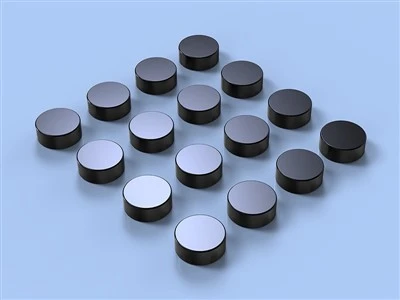
Black Nickel Magnets are a type of neodymium magnet that have been coated with a layer of black nickel. Neodymium magnets are known for their exceptional magnetic properties, including high remanence, coercivity, and energy product. The black nickel coating provides these magnets with enhanced corrosion resistance and a sleek, black finish, making them suitable for a wide range of applications.


The remanence of Black Nickel Magnets typically ranges from 1.1 to 1.4 teslas (11,000 to 14,000 gauss), depending on the specific grade of neodymium used in their production. The remanence value of a magnet is determined by its chemical composition, crystal structure, and manufacturing process. Higher-grade neodymium magnets generally have higher remanence values, as they contain a greater proportion of neodymium, iron, and boron, which are the key elements responsible for the magnet's magnetic properties.
Factors Affecting Remanence
Several factors can influence the remanence of Black Nickel Magnets, including temperature, mechanical stress, and exposure to external magnetic fields.
Temperature: The remanence of a magnet is highly dependent on temperature. As the temperature increases, the magnetic domains within the magnet become more disordered, causing the remanence to decrease. This phenomenon is known as thermal demagnetization. Neodymium magnets have a relatively high Curie temperature, which is the temperature at which they lose their magnetic properties completely. However, they can still experience significant reductions in remanence at elevated temperatures. To mitigate the effects of temperature on remanence, special high-temperature grades of neodymium magnets are available.
Mechanical Stress: Mechanical stress, such as bending, twisting, or impact, can also affect the remanence of a magnet. When a magnet is subjected to mechanical stress, the magnetic domains within the magnet can be reoriented, causing a decrease in remanence. To minimize the impact of mechanical stress on remanence, it is important to handle and install Black Nickel Magnets with care and to avoid subjecting them to excessive force.
External Magnetic Fields: Exposure to external magnetic fields can cause the remanence of a magnet to change. If a magnet is exposed to a magnetic field that is stronger than its coercivity, the magnetic domains within the magnet can be reoriented, causing a decrease in remanence. To protect Black Nickel Magnets from the effects of external magnetic fields, they can be shielded using materials with high magnetic permeability, such as mu-metal.
Applications of Black Nickel Magnets Based on Remanence
The high remanence of Black Nickel Magnets makes them suitable for a wide range of applications in various industries. Here are some examples:
Motors and Generators: Black Nickel Magnets are commonly used in electric motors and generators due to their high magnetic strength. In motors, the magnets are used to create a magnetic field that interacts with an electric current to produce mechanical motion. In generators, the magnets are used to convert mechanical energy into electrical energy. The high remanence of Black Nickel Magnets allows for more efficient operation and higher power output in these applications.
Magnetic Separators: Magnetic separators are used to remove ferrous materials from non-ferrous materials in industries such as mining, recycling, and food processing. Black Nickel Magnets are ideal for magnetic separators because of their strong magnetic fields, which can effectively attract and separate ferrous particles from other materials.
Magnetic Sensors: Magnetic sensors are used to detect the presence, strength, or direction of a magnetic field. Black Nickel Magnets can be used as the magnetic source in these sensors, providing a stable and reliable magnetic field. The high remanence of the magnets ensures that the sensors can accurately detect and measure magnetic fields over a wide range of conditions.
Magnetic Jewelry and Accessories: Black Nickel Magnets are also used in the production of magnetic jewelry and accessories, such as bracelets, necklaces, and earrings. The high remanence of the magnets allows for a strong magnetic closure, ensuring that the jewelry stays securely in place. Additionally, the black nickel coating provides a stylish and durable finish.
Comparing Black Nickel Magnets with Other Coated Magnets
In addition to Black Nickel Magnets, there are several other types of coated neodymium magnets available on the market, each with its own unique properties and applications. Let's compare Black Nickel Magnets with some of the other popular coated magnets:
Standard Nickel Magnet: Standard Nickel Magnets are coated with a layer of nickel, which provides good corrosion resistance and a shiny finish. The remanence of Standard Nickel Magnets is similar to that of Black Nickel Magnets, but they may not be as visually appealing due to their shiny surface.
Electroless Nickel Magnet: Electroless Nickel Magnets are coated with a layer of electroless nickel, which provides excellent corrosion resistance and a uniform finish. The remanence of Electroless Nickel Magnets is also similar to that of Black Nickel Magnets, but they may be more expensive due to the additional processing required for the electroless nickel coating.
Epoxy Coating Magnet: Epoxy Coating Magnets are coated with a layer of epoxy, which provides good corrosion resistance and a smooth finish. The remanence of Epoxy Coating Magnets is comparable to that of Black Nickel Magnets, but they may be more suitable for applications where a non-metallic coating is required.
Tin Coating Magnet: Tin Coating Magnets are coated with a layer of tin, which provides good corrosion resistance and a soft, malleable finish. The remanence of Tin Coating Magnets is similar to that of Black Nickel Magnets, but they may be more prone to scratching and damage.
Conclusion
In conclusion, the remanence of Black Nickel Magnets is a key property that determines their magnetic strength and performance. With remanence values ranging from 1.1 to 1.4 teslas, these magnets offer a powerful magnetic field that makes them suitable for a wide range of applications in various industries. However, it is important to consider the factors that can affect remanence, such as temperature, mechanical stress, and external magnetic fields, to ensure optimal performance.
If you're in the market for high-quality Black Nickel Magnets or have any questions about their properties and applications, I encourage you to reach out to us. We're a leading supplier of Black Nickel Magnets and can provide you with the expert guidance and support you need to make the right choice for your specific requirements. Contact us today to discuss your needs and explore how our Black Nickel Magnets can enhance your products and applications.
References
- "Neodymium Magnets: Properties, Applications, and Manufacturing." Handbook of Magnetic Materials, vol. 21, 2013, pp. 327-390.
- "Magnetic Materials: Principles and Applications." Second Edition, John Wiley & Sons, 2009.
- "Magnetism and Magnetic Materials." Oxford University Press, 2009.