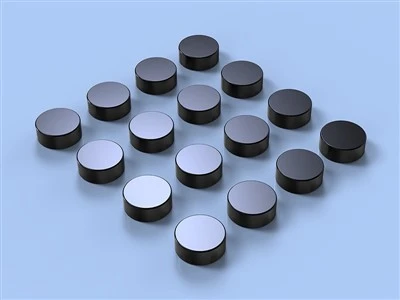

Neodymium iron boron (NdFeB) cylinder magnets are among the most powerful permanent magnets available on the market today. They are widely used in various applications, including motors, generators, magnetic separators, and magnetic resonance imaging (MRI) machines. Understanding the magnetic field distribution around NdFeB cylinder magnets is crucial for optimizing their performance in these applications. As a supplier of NdFeB Cylinder Magnet, I will delve into the details of the magnetic field distribution of these remarkable magnets in this blog.


Basics of Magnetic Fields
Before we explore the magnetic field distribution around NdFeB cylinder magnets, it is essential to understand the fundamental concepts of magnetic fields. A magnetic field is a vector field that describes the magnetic influence on moving electric charges, electric currents, and magnetic materials. In the case of permanent magnets like NdFeB cylinder magnets, the magnetic field is generated by the alignment of atomic magnetic moments within the material.
The magnetic field is characterized by two main parameters: magnetic flux density (B) and magnetic field strength (H). Magnetic flux density, also known as the magnetic induction, is a measure of the strength of the magnetic field at a particular point. It is typically measured in teslas (T) or gauss (G), where 1 T = 10,000 G. Magnetic field strength, on the other hand, is a measure of the force exerted on a magnetic pole placed in the magnetic field. It is measured in amperes per meter (A/m).
Magnetic Field Distribution around NdFeB Cylinder Magnets
The magnetic field distribution around an NdFeB cylinder magnet is a complex three - dimensional pattern. However, we can simplify the analysis by considering the axial and radial directions of the cylinder magnet.
Axial Magnetic Field Distribution
The axial direction is along the axis of the cylinder magnet. At the center of the magnet, the magnetic field lines are parallel to the axis of the cylinder. As we move away from the center towards the ends of the magnet, the magnetic field lines start to spread out.
Near the poles of the magnet, the magnetic field strength is the highest. The magnetic field lines emerge from the north pole and enter the south pole. The magnetic flux density along the axis of the cylinder magnet can be calculated using the formula for the magnetic field of a solenoid, which provides a good approximation for a long cylinder magnet. For a cylinder magnet of length (L) and radius (R), the magnetic flux density (B_z) at a point (z) along the axis is given by:
[B_z=\frac{\mu_0 M}{2}\left(\frac{z + L/2}{\sqrt{R^{2}+(z + L/2)^{2}}}-\frac{z - L/2}{\sqrt{R^{2}+(z - L/2)^{2}}}\right)]
where (\mu_0 = 4\pi\times10^{- 7}\ T\cdot m/A) is the permeability of free space, and (M) is the magnetization of the NdFeB material.
Radial Magnetic Field Distribution
The radial direction is perpendicular to the axis of the cylinder magnet. The radial magnetic field is zero at the center of the magnet and increases as we move towards the surface of the magnet. At the surface of the magnet, the radial magnetic field reaches its maximum value.
The magnetic field distribution in the radial direction is more complex than in the axial direction. It can be calculated using numerical methods such as the finite element method (FEM). FEM allows us to model the magnetic field distribution in three - dimensional space, taking into account the shape, size, and magnetization of the magnet.
Factors Affecting the Magnetic Field Distribution
Several factors can affect the magnetic field distribution around NdFeB cylinder magnets:
Magnet Dimensions
The length and radius of the cylinder magnet play a significant role in determining the magnetic field distribution. A longer magnet will have a more uniform magnetic field along its axis, while a shorter magnet will have a more concentrated magnetic field near the poles. Similarly, a larger - radius magnet will have a stronger magnetic field at its surface compared to a smaller - radius magnet.
Magnetization Direction
The magnetization direction of the NdFeB cylinder magnet also affects the magnetic field distribution. If the magnet is magnetized axially (along the axis of the cylinder), the magnetic field will be strongest along the axis. If the magnet is magnetized radially (perpendicular to the axis), the magnetic field will be strongest at the surface of the magnet.
Surrounding Materials
The presence of surrounding magnetic materials can also affect the magnetic field distribution around the NdFeB cylinder magnet. For example, if the magnet is placed near a ferromagnetic material, the magnetic field lines will be attracted to the ferromagnetic material, altering the magnetic field distribution in the vicinity of the magnet.
Applications of Understanding Magnetic Field Distribution
Understanding the magnetic field distribution around NdFeB cylinder magnets is essential for many applications:
Motor and Generator Design
In motors and generators, the magnetic field distribution affects the efficiency and performance of the device. By optimizing the magnetic field distribution around the NdFeB cylinder magnets used in these devices, engineers can improve their power output and reduce energy losses.
Magnetic Separation
In magnetic separation applications, the magnetic field distribution determines the effectiveness of the separation process. By controlling the magnetic field distribution around the NdFeB cylinder magnets, it is possible to selectively attract and separate magnetic particles from non - magnetic materials.
MRI Machines
In magnetic resonance imaging (MRI) machines, the magnetic field distribution must be highly uniform to produce high - quality images. Understanding the magnetic field distribution around NdFeB cylinder magnets helps in the design and optimization of MRI magnets to achieve the required uniformity.
Other Related NdFeB Magnet Shapes
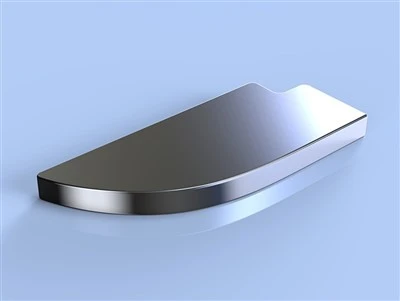
As a supplier, we offer a variety of NdFeB magnet shapes to meet different customer needs. In addition to NdFeB Cylinder Magnet, we also provide Adhesive NdFeB Magnet, Through Hole Magnet, NdFeB Irregular Magnet, and NdFeB Cube Magnet. Each shape has its own unique magnetic field distribution and application scenarios.
Contact Us for Procurement
If you are interested in our NdFeB cylinder magnets or other related products, we invite you to contact us for procurement discussions. Our team of experts is ready to assist you in selecting the right magnets for your specific applications and providing you with high - quality products at competitive prices.
References
- Bozorth, R. M. (1951). Ferromagnetism. Van Nostrand.
- Cullity, B. D., & Graham, C. D. (2008). Introduction to Magnetic Materials (2nd ed.). Wiley.
- Sadiku, M. N. O. (2014). Elements of Electromagnetics (6th ed.). Oxford University Press.